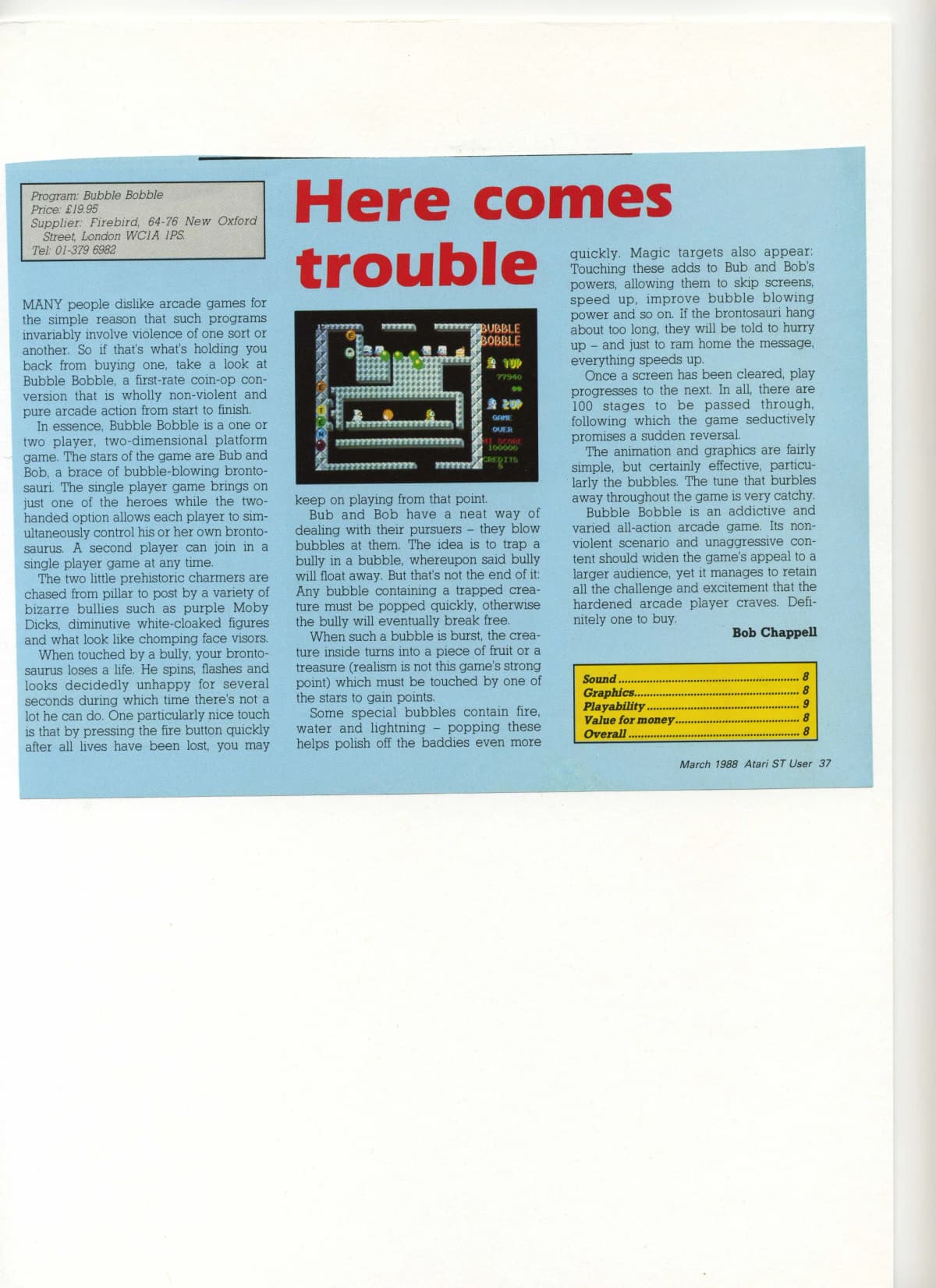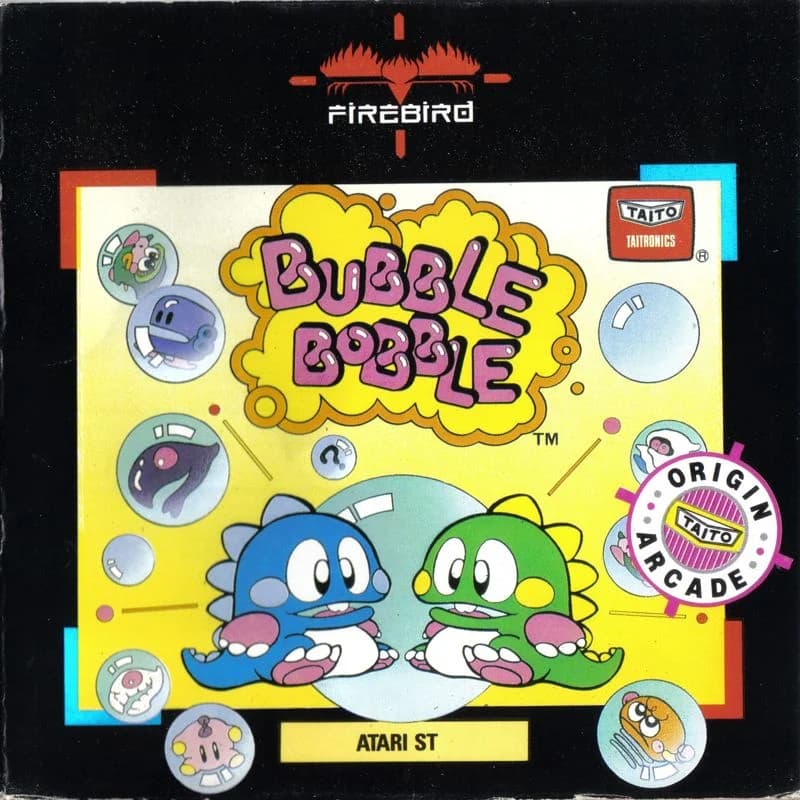
Bubble Bobble
I took out a bank loan to buy an Atari ST. Looking back, that was a bold move for someone my age, but I was determined to learn Motorola 68000 (MC68000) assembly language while at college. That machine became my gateway into professional game development.
Landing the Job
I spotted an advertisement in the local newspaper - "Wanted: Atari ST programmer. Salary: £8,000." That was decent money back then. The interview was refreshingly informal. I turned up with a floppy disk containing some sprite demos I'd made, plus a bitmap image of a Jean Michel Jarre album cover. That was my portfolio - everything I could do on the machine.
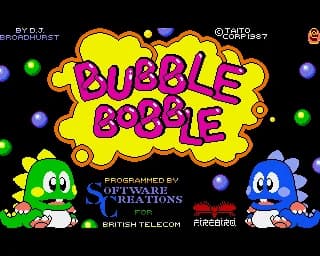
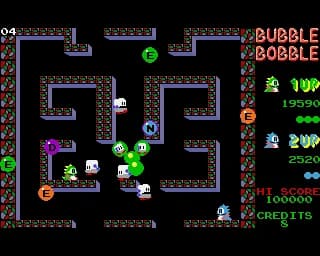
They hired me, and Bubble Bobble was my first project. An arcade conversion with absolutely no documentation. The team just played the game over and over, taking screenshots with a 35mm camera to figure out how everything worked. It was reverse engineering at its most basic.
A Strange Incident
Something odd happened during the development. The company was interviewing another programmer. We all went out to lunch, leaving the candidate in the office. When we got back, there were accusations that he'd copied the Atari ST version of Bubble Bobble while we were gone.
I was never 100% sure what really happened. But a partially completed version did end up circulating around local computer clubs, which made the accusation more believable. It's one of those situations where you'll never know the full truth. Game development in the 1980s had its share of questionable moments.
The Bus Journey
Here's the thing - Software Creations didn't have an Atari ST for the first couple of weeks. I still remember getting on the bus with my Atari ST tucked into a black bin bag under my arm, traveling to the Manchester office. Must have looked suspicious as hell. But that's how we did it back then - you used what you had.
Learning by Doing
The rest of the team worked on ZX Spectrum, Commodore 64 (C64), and Amstrad CPC versions. I was on my own with the 16-bit ports. No internet, just a hardware manual and lots of late nights working things out. Those were great days, honestly. Every problem solved felt like a genuine achievement.
Moving to Amiga
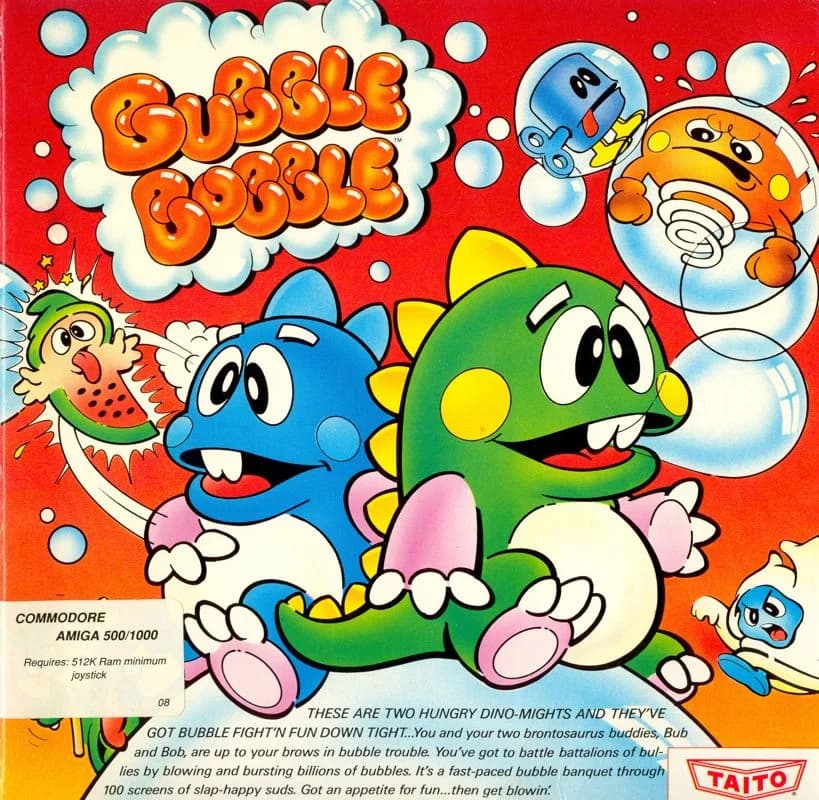
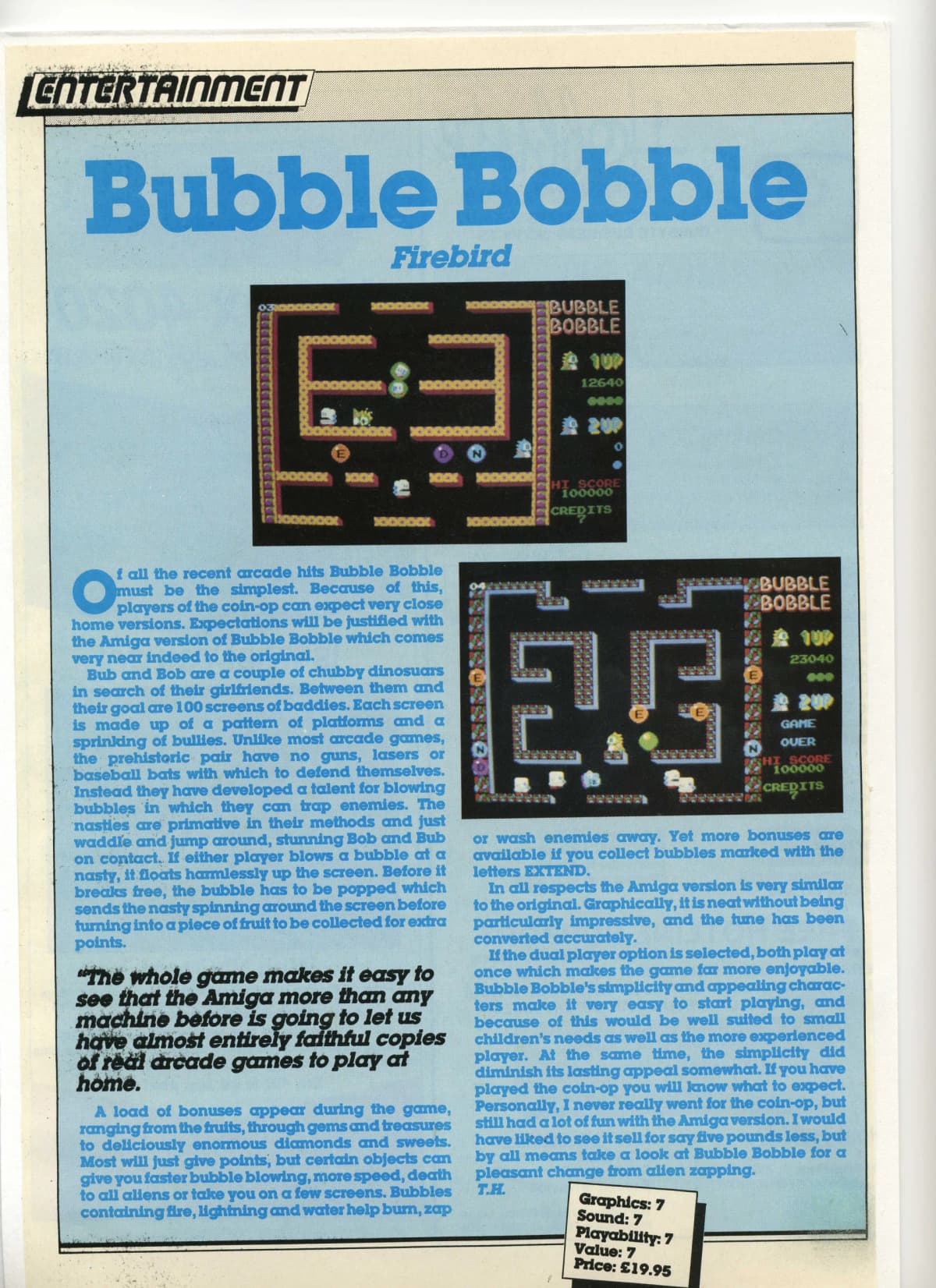
Once the Atari ST version was complete, I started work on the Amiga port. I bought my own Amiga machine - another investment, but necessary. I ended up building the game on the Atari ST and pushing the compiled code to the Amiga using a serial cable. This was one of my few attempts at working with hardware directly.
I still have scars on my finger from trying to solder that serial cable. Not my finest moment, but it worked. That's what mattered - getting the job done, even if it meant a bit of blood along the way.
The Christmas Rush
Funny how things work out. There was a rush to get the Amiga version sent to the USA publisher. For me, it was mostly changing the refresh rate to 60 Hz for the National Television System Committee (NTSC) format. Of course, I didn't have an NTSC machine to test on - just had to trust the code would work.
Software Creations offered me extra money if I met the deadline. I can still remember Richard Kay showing up at my home on Christmas Day with a £500 check in exchange for the NTSC disk. Good times at the Broadhurst household that Christmas. Nothing like a bonus payment on December 25th to make the holidays memorable.
Screenshots